
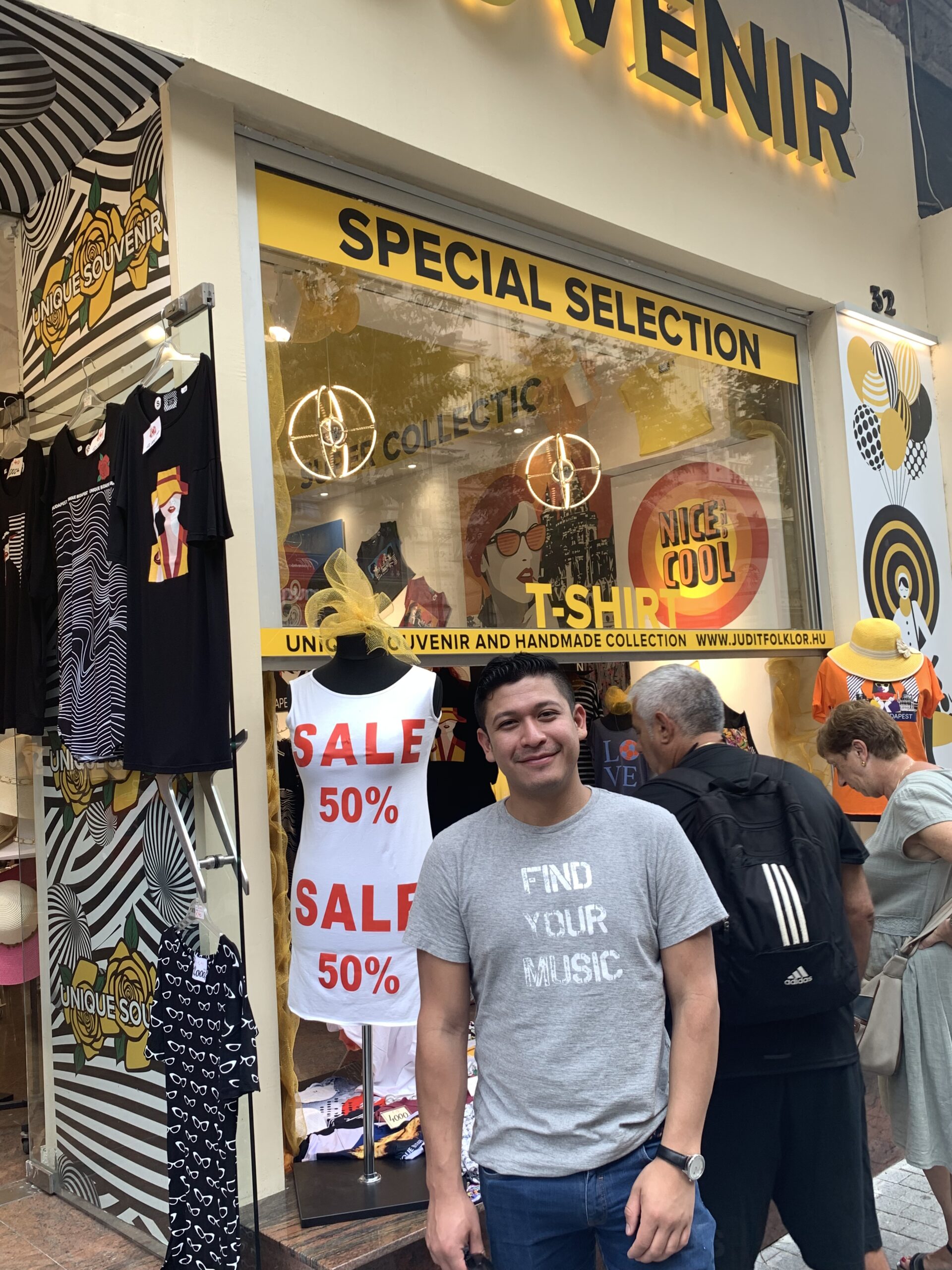
Discounts can drive traffic and revenue, but relying on them too heavily can change how customers perceive a brand's value. The real challenge for retailers isn't simply deciding how much to discount. It's giving customers compelling reasons to shop, return, and remain loyal even when there isn't a promotion.
I love a good sale.
Who doesn't?
There's something satisfying about finding a product you want and discovering that it's 30% off. Even better when you weren't expecting it. But I've noticed something about the way I shop certain retailers. I don't necessarily think about whether I want the product. I think about whether I should wait for the next promotion.
Because I know it's coming.
Maybe this weekend. Maybe next Tuesday. Possibly in the next 45 minutes, judging by the number of promotional emails some brands send. And when that happens, I think something important has changed in the relationship between the customer and the retailer. The discount is no longer a pleasant surprise.
It's become part of the expected price.
That's a much bigger problem than deciding what percentage to put on the next promotional banner.
We've trained customers to wait.
Retailers have good reasons to run promotions. They need to manage inventory, respond to competitors, attract new customers, and meet revenue targets. Discounts can help accomplish all of those things. But when promotions become constant, customers learn. They notice patterns. They recognize that the same retailer seems to offer 20% off every few weeks.
They know the holiday promotion will probably be followed by an even bigger clearance event. And they begin adjusting their behavior accordingly. Why buy something today at full price when there's a reasonable chance it will be cheaper next week? From the customer's perspective, that's a perfectly rational decision. From the retailer's perspective, it creates a difficult cycle.
The business uses promotions to stimulate demand. Customers become accustomed to those promotions. Full-price demand weakens. And the business becomes increasingly dependent on discounts to generate the same level of activity. At some point, the promotional calendar isn't simply supporting the retail strategy. It's driving it.
Revenue is not the same thing as profitable growth.
Here's where things get particularly interesting. A promotion can produce impressive results. Traffic increases. Conversion rates improve. Orders come in. Revenue rises.
Everyone celebrates.
And sometimes, they absolutely should.
But there's a difference between generating revenue and generating profitable, incremental revenue. Imagine a retailer sells a product for $100. The retailer runs a 25% promotion, bringing the price down to $75. If the product costs $50, the gross profit per unit falls from $50 to $25. That's a 50% reduction in gross profit per unit, even though the selling price fell by only 25%.
To generate the same total gross profit, the retailer would need to sell twice as many units, assuming those economics and no other changes. That's a simplified example, of course. Real retail economics involve many additional considerations, including inventory costs, fulfillment, returns, customer acquisition, and the potential lifetime value of new customers.
But the underlying point matters.
A promotion that generates more orders isn't automatically creating more economic value.
And even when a campaign performs well against its revenue target, we should still ask how much of that demand was truly incremental. Would some customers have purchased anyway? Did we simply pull purchases forward from next week? Did we attract customers who will return at full price, or only when the next discount appears? Those questions aren't always easy to answer.
But they're central to understanding whether promotional activity is helping the business grow or simply making it work harder for the same profit.
The original price has to mean something.
There's another dimension to this problem that goes beyond margin.
Trust.
When a product is perpetually discounted, customers can start questioning whether the original price was ever meaningful. If something is regularly advertised as $100 but almost always available for $70, what is it actually worth? From the customer's perspective, $70 may become the reference point.
The $100 price begins to feel less like the normal price and more like a number that exists to make the discount look attractive. That's not a particularly strong foundation for a customer relationship. And it's one reason I think retailers need to consider how promotional strategies affect perceived value over time. A discount should communicate an opportunity.
It shouldn't create confusion about what the product is genuinely worth.
Private label changes the conversation.
One of the more interesting developments in retail has been the evolution of private-label and owned brands. Historically, private label was often associated with lower prices and more basic alternatives to national brands. That perception has changed considerably.
Today, some retailers have developed owned brands that customers actively seek out because they appreciate the design, quality, convenience, or overall value. That's an important distinction. The customer isn't necessarily choosing the product because it's the cheapest option. They're choosing it because they believe it's a good product at a price that makes sense.
And for retailers, that can create a different kind of competitive advantage. Instead of relying exclusively on promotions to make an assortment attractive, the business can differentiate through products that customers can't find in exactly the same form elsewhere. Of course, private label isn't a universal solution.
It requires investment in product development, sourcing, quality, merchandising, and brand building. And customers won't automatically embrace an owned brand simply because a retailer puts its name on the packaging. But when done well, it demonstrates something important.
Retailers can create value through differentiation, not just discounting.
That's a much more sustainable conversation to have with customers.
Value means different things to different customers.
One of the challenges in retail is that we sometimes treat value as though it has a universal definition. It doesn't. For one customer, value means getting the lowest possible price. For another, it means quality that lasts. Someone else might prioritize convenience, customer service, product selection, or confidence that what they're buying will meet their needs.
And those priorities can change depending on the purchase. I might happily pay more for a product I use every day and care deeply about. For something else, price might be the deciding factor. Neither decision is irrational. That's why I think retailers have an opportunity to become more sophisticated in how they communicate value.
Instead of assuming every customer needs another discount, consider what might actually influence their decision. Maybe it's better product information. Maybe it's a more relevant recommendation. Maybe it's reassurance about quality or fit. Maybe it's convenience. And yes, sometimes it's a promotion. The point isn't to eliminate discounts.
It's to stop treating them as the default answer to every commercial challenge.
Personalization should do more than distribute coupons.
This is where my experience in marketing technology and personalization shapes how I think about the issue. Retailers have access to increasingly sophisticated tools for understanding customer behavior, predicting preferences, and delivering relevant experiences.
AI can help organizations make those decisions at a scale that would have been difficult to achieve through traditional segmentation alone. But there's a difference between using personalization to create value and using it simply to decide who gets which discount. Imagine a customer browsing a product category.
A retailer might determine that the customer is likely to respond to a promotional offer. That's useful information. But it isn't the only possible decision. Perhaps the customer would be more likely to purchase if they received better product recommendations. Perhaps they're comparing options and need more information.
Perhaps they're already highly likely to purchase without an incentive. Or perhaps they aren't ready to buy at all. The most valuable decision isn't necessarily which offer will generate a conversion. It's which experience will create the best outcome for the customer and the business. That requires looking beyond immediate campaign performance.
It means considering incrementality, profitability, customer behavior, and the long-term relationship. And sometimes, the best offer is no offer at all.
The promotional calendar shouldn't be the strategy.
I understand the pressure retail organizations face. There are quarterly targets to meet, inventory to move, competitors to respond to, and customers who have become increasingly thoughtful about how they spend their money. Promotions are often one of the fastest tools available to influence demand. And in the right circumstances, they're exactly the right tool.
But speed and convenience can make them easy to overuse. If every revenue challenge leads to another discount, the organization may never address the underlying question of why customers aren't willing to purchase at the current price. Maybe the assortment isn't differentiated enough. Maybe the customer experience is frustrating.
Maybe the product isn't communicating its value effectively. Maybe the pricing itself needs to change. Or maybe the retailer is serving a customer whose priorities have shifted. Those are harder problems to solve than launching another promotion. But they're also the problems that determine whether a business can build lasting customer relationships and sustainable growth.
Give customers a reason to buy, not just a reason to wait.
I don't believe retail needs fewer promotions simply for the sake of having fewer promotions. I believe retailers need a clearer understanding of what makes their products, brands, and experiences valuable. Sometimes that value will be expressed through price. Sometimes through quality, convenience, service, or differentiation. And often through a combination of those things.
The goal should be to create a relationship where customers feel confident that what they're buying is worth what they're paying. Not one where they feel foolish for purchasing something before the next sale. Because when every day feels like a promotional event, the discount stops being special. And the customer starts wondering whether the full price was ever worth paying.
A great retail strategy gives customers a reason to buy today that goes beyond the possibility of saving money tomorrow.
Now, if you'll excuse me, I'm going to leave something in my shopping cart and see whether a 20% off email shows up.
For research purposes, obviously. 😉

Julio Lopez
I've spent more than 16 years helping enterprise brands connect their business priorities with the technology and strategies needed to deliver better customer experiences and measurable results.
My career has spanned marketing technology, personalization, AI, and customer engagement, with roles at CheetahMail/Epsilon, RevTrax, Eversight, Movable Ink, and Validity. Throughout that time, I've worked at the intersection of business strategy and technology, helping organizations turn complex capabilities into practical solutions that drive growth, strengthen customer relationships, and deliver meaningful outcomes.
More about Julio ↗